In today’s hyper-connected digital landscape, data has become one of the most valuable assets for modern organizations. From customer interactions and transaction histories to IoT devices and social media engagement, businesses are generating vast amounts of data every second. This phenomenon, commonly referred to as “Big Data,” presents immense opportunities for companies to gain insights, improve decision-making, and maintain a competitive edge.
However, managing and leveraging Big Data is far from simple. Organizations face a wide range of challenges, including data storage, security, integration, processing speed, and talent shortages. Without proper strategies and solutions, Big Data can quickly become overwhelming rather than beneficial.
This article explores the major challenges organizations face when dealing with Big Data and provides practical, modern solutions to overcome them effectively.
What is Big Data?
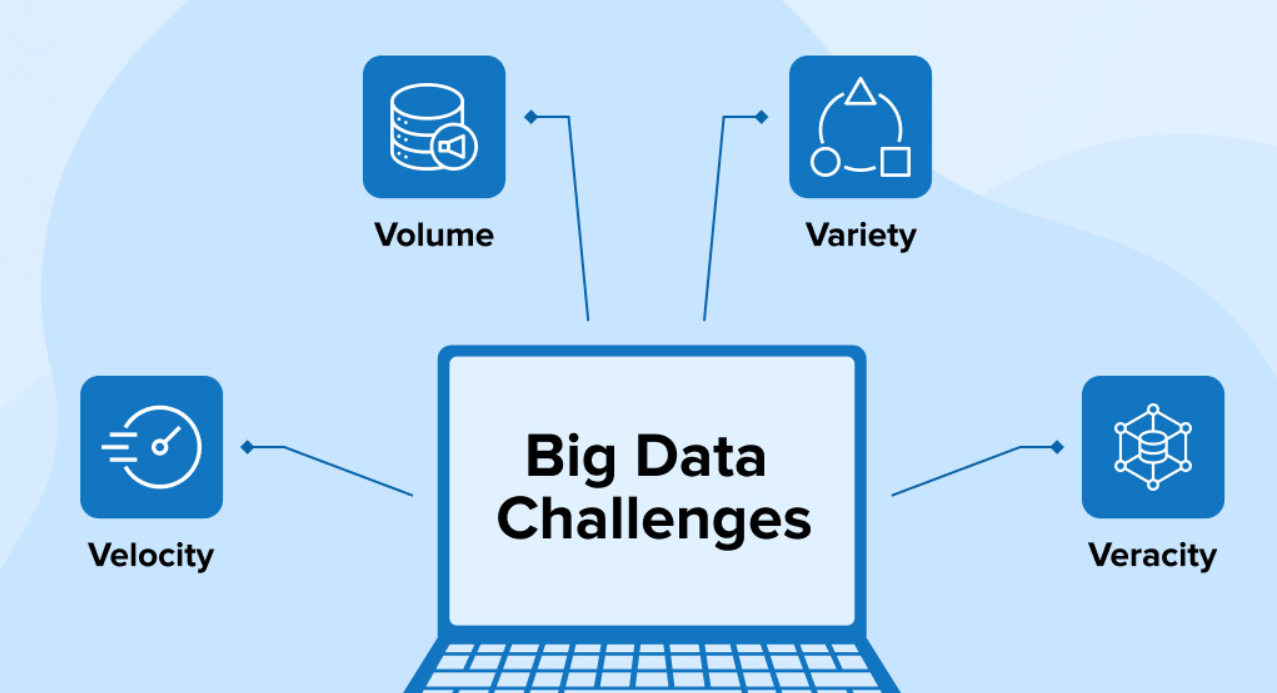
Big Data refers to extremely large datasets that cannot be easily managed, processed, or analyzed using traditional data processing tools. It is commonly defined by the “5 Vs”:
- Volume – Massive amounts of data generated daily
- Velocity – The speed at which data is created and processed
- Variety – Different types of data (structured, semi-structured, unstructured)
- Veracity – The reliability and quality of data
- Value – The usefulness of data in decision-making
Organizations that successfully harness Big Data can uncover patterns, predict trends, and make data-driven decisions.
Key Big Data Challenges
1. Data Volume and Storage
One of the biggest challenges organizations face is handling the sheer volume of data. Traditional storage systems are not designed to accommodate petabytes or exabytes of data.
Issues include:
- High infrastructure costs
- Difficulty scaling storage systems
- Inefficient data retrieval
Solution
Modern organizations are turning to scalable cloud storage solutions such as data lakes and distributed storage systems. Technologies like distributed file systems allow data to be stored across multiple machines, making it easier to scale as data grows.
Cloud platforms also offer pay-as-you-go models, reducing upfront investment and allowing organizations to scale dynamically.
2. Data Integration from Multiple Sources
Organizations collect data from various sources such as CRM systems, social media, sensors, and third-party platforms. Integrating this data into a unified system is complex.
Challenges include:
- Data silos
- Inconsistent data formats
- Duplicate or conflicting data
Solution
Implementing robust ETL (Extract, Transform, Load) processes helps standardize and consolidate data. Modern data integration tools and APIs enable seamless data flow across systems.
Data warehouses and data lakes also play a crucial role in centralizing information, making it easier to access and analyze.
3. Data Quality and Accuracy
Poor data quality can lead to incorrect insights and bad business decisions. Incomplete, outdated, or inconsistent data reduces trust in analytics systems.
Common problems:
- Missing data
- Duplicate records
- Incorrect formatting
Solution
Organizations must implement strong data governance frameworks. This includes:
- Data validation rules
- Data cleansing processes
- Regular audits
Using automated tools powered by AI can also help identify anomalies and maintain data accuracy.
4. Data Security and Privacy
With the increasing volume of sensitive data, security has become a critical concern. Data breaches can result in financial loss, legal consequences, and reputational damage.
Key concerns:
- Unauthorized access
- Data leaks
- Compliance with regulations
Solution
Organizations should adopt a multi-layered security approach:
- Encryption (both at rest and in transit)
- Access control mechanisms
- Regular security audits
Compliance with regulations such as GDPR and other data protection laws is essential. Implementing zero-trust security models further enhances protection.
5. Real-Time Data Processing
Modern businesses require real-time insights to remain competitive. However, processing large volumes of data in real time is technically challenging.
Challenges include:
- High latency
- System bottlenecks
- Complex streaming architectures
Solution
Organizations can leverage real-time data processing frameworks such as stream processing systems. These tools allow businesses to process data as it arrives, enabling faster decision-making.
Edge computing is also gaining popularity, allowing data to be processed closer to the source, reducing latency.
6. Lack of Skilled Professionals
Big Data requires specialized skills in data engineering, data science, and analytics. Many organizations struggle to find qualified professionals.
Skill gaps include:
- Data analysis
- Machine learning
- Data architecture
Solution
Companies should invest in:
- Employee training programs
- Upskilling initiatives
- Partnerships with educational institutions
Additionally, adopting user-friendly analytics tools can empower non-technical employees to work with data effectively.
7. Data Governance and Compliance
Managing data responsibly is essential for maintaining trust and meeting legal requirements. Poor governance can lead to data misuse and compliance violations.
Issues include:
- Lack of clear policies
- Inconsistent data handling practices
- Regulatory risks
Solution
Establishing a strong data governance framework is critical. This includes:
- Defining data ownership
- Setting usage policies
- Monitoring data lifecycle
Automated compliance tools can help organizations adhere to regulations efficiently.
8. Scalability Issues
As organizations grow, their data needs increase. Systems that are not designed to scale can become bottlenecks.
Challenges include:
- Performance degradation
- Increased downtime
- Higher operational costs
Solution
Adopting cloud-native architectures and microservices enables scalability. Containerization technologies also allow systems to scale efficiently based on demand.
9. Data Visualization and Interpretation
Even when data is properly collected and processed, presenting it in a meaningful way remains a challenge.
Problems include:
- Complex dashboards
- Misleading visualizations
- Lack of user-friendly tools
Solution
Organizations should invest in modern data visualization tools that provide intuitive dashboards and interactive features. Clear and simple visualizations help stakeholders understand insights quickly.
10. Cost Management
Big Data initiatives can be expensive, especially when dealing with infrastructure, tools, and talent.
Cost drivers include:
- Storage infrastructure
- Processing power
- Licensing fees
Solution
To control costs, organizations can:
- Use cloud-based solutions
- Optimize data storage strategies
- Implement data lifecycle management
Archiving less critical data and eliminating redundant data can significantly reduce expenses.
Emerging Trends in Big Data Solutions
1. Artificial Intelligence and Machine Learning
AI and ML are transforming how organizations analyze Big Data. These technologies can automatically detect patterns, predict trends, and generate insights.
2. Data Fabric Architecture
Data fabric provides a unified architecture that connects data across different environments, improving accessibility and integration.
3. Edge Computing
Processing data closer to the source reduces latency and enhances real-time capabilities, especially for IoT applications.
4. Automation
Automation tools streamline data management processes, reducing manual effort and improving efficiency.
Best Practices for Managing Big Data
To successfully overcome Big Data challenges, organizations should follow these best practices:
1. Define Clear Objectives
Start with a clear understanding of what you want to achieve with Big Data. Align data strategies with business goals.
2. Invest in the Right Technology
Choose tools and platforms that match your organization’s needs and scalability requirements.
3. Focus on Data Quality
High-quality data is the foundation of accurate insights. Implement continuous data quality monitoring.
4. Strengthen Security Measures
Protect sensitive data with robust security frameworks and compliance strategies.
5. Build a Data-Driven Culture
Encourage employees to use data in decision-making processes. Provide training and resources to support this culture.
Case Study Example (Illustrative)
Consider a retail company that collects customer data from online and offline channels. Initially, the company struggled with fragmented data systems and inconsistent customer insights.
By implementing a centralized data platform and real-time analytics tools, the company was able to:
- Improve customer segmentation
- Personalize marketing campaigns
- Increase sales and customer satisfaction
This example highlights how addressing Big Data challenges can lead to tangible business benefits.
Future Outlook of Big Data
The importance of Big Data will continue to grow as digital transformation accelerates. Organizations that invest in modern data strategies will gain a significant competitive advantage.
Key future developments include:
- Increased adoption of AI-driven analytics
- Greater emphasis on data privacy
- Expansion of real-time data processing capabilities
Businesses must remain agile and continuously adapt to evolving technologies and challenges.
Conclusion
Big Data presents both significant challenges and incredible opportunities for modern organizations. While issues such as data integration, security, scalability, and talent shortages can be daunting, they are not insurmountable.
By adopting the right technologies, implementing strong governance frameworks, and fostering a data-driven culture, organizations can turn Big Data into a powerful strategic asset.
Ultimately, success in the Big Data era depends on the ability to transform raw data into actionable insights. Companies that master this process will be better equipped to innovate, compete, and thrive in an increasingly data-centric world.
Final Thoughts
Organizations must view Big Data not as a burden, but as an opportunity. With the right mindset and strategic approach, the challenges of Big Data can be effectively managed and transformed into drivers of growth and innovation.
Investing in scalable infrastructure, enhancing data security, and empowering teams with the right skills will ensure long-term success in leveraging Big Data.
The future belongs to organizations that can harness the full potential of their data—turning information into intelligence and intelligence into impact.