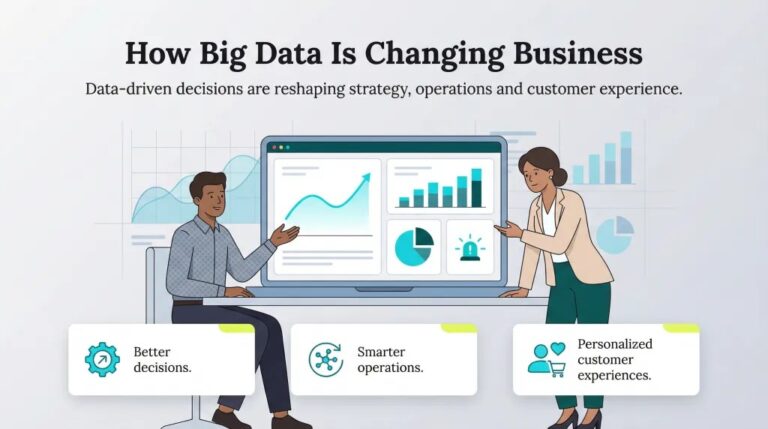
In today’s hyper-connected digital landscape, data has become one of the most valuable assets for businesses across the globe. Every interaction, click, purchase, and even hesitation leaves behind a digital footprint. When these vast volumes of structured and unstructured data are collected, processed, and analyzed, they form what is known as Big Data. The influence of Big Data on marketing strategies and customer behavior is profound, reshaping how organizations understand, engage, and retain their audiences.
This article explores in depth how Big Data impacts marketing strategies and customer behavior, why it matters, and how businesses can leverage it effectively to stay competitive in an increasingly data-driven world.
Understanding Big Data in Marketing
Big Data refers to extremely large datasets that cannot be processed using traditional data management tools. It is typically defined by the “3Vs”:
- Volume: Massive amounts of data generated every second
- Velocity: The speed at which data is created and processed
- Variety: Different types of data such as text, images, videos, and more
In marketing, Big Data comes from multiple sources including:
- Social media interactions
- Website analytics
- Customer purchase histories
- Mobile app usage
- Email campaigns
- IoT devices
By analyzing this data, marketers gain deeper insights into customer preferences, behaviors, and trends.
The Evolution of Marketing Through Data
Traditional marketing relied heavily on assumptions, limited surveys, and broad demographic targeting. Campaigns were often generalized and lacked personalization. However, with the emergence of Big Data, marketing has evolved into a highly targeted, precise, and measurable discipline.
Modern marketing strategies now focus on:
- Data-driven decision making
- Real-time customer insights
- Personalized user experiences
- Predictive analytics
This shift has enabled businesses to move from reactive to proactive marketing approaches.
How Big Data Transforms Marketing Strategies
1. Enhanced Customer Segmentation
One of the most significant impacts of Big Data is improved customer segmentation. Instead of grouping customers based on basic demographics like age or gender, marketers can now segment audiences using:
- Behavioral patterns
- Purchasing habits
- Online activity
- Interests and preferences
This allows businesses to create highly targeted campaigns tailored to specific audience segments, increasing relevance and engagement.
2. Personalization at Scale
Big Data enables hyper-personalization, where marketing messages are customized for individual users.
Examples include:
- Personalized product recommendations
- Dynamic website content
- Customized email campaigns
- Targeted advertisements
When customers feel understood, they are more likely to engage and convert. Personalization not only improves user experience but also significantly boosts conversion rates.
3. Predictive Analytics for Better Decision Making
Predictive analytics uses historical data to forecast future outcomes. Marketers can anticipate:
- Customer needs
- Buying behavior
- Market trends
- Campaign performance
This allows businesses to make informed decisions, reduce risks, and allocate resources more effectively.
4. Real-Time Marketing Optimization
Big Data allows marketers to monitor campaigns in real time and make instant adjustments.
Benefits include:
- Identifying underperforming campaigns quickly
- Optimizing ad spend
- Testing multiple variations (A/B testing)
- Responding to customer behavior instantly
Real-time insights help businesses stay agile and competitive.
5. Improved Customer Journey Mapping
Understanding the customer journey is crucial for effective marketing. Big Data provides a comprehensive view of how customers interact with a brand across different touchpoints.
Marketers can analyze:
- Entry points (e.g., social media, search engines)
- Browsing behavior
- Conversion paths
- Drop-off points
This insight helps optimize the entire customer journey, ensuring a seamless and engaging experience.
6. Data-Driven Content Marketing
Content marketing becomes more effective when guided by data. Big Data helps identify:
- What type of content resonates with audiences
- Which platforms perform best
- Optimal posting times
- Trending topics
This ensures that content strategies are aligned with audience preferences, increasing engagement and visibility.
7. Smarter Advertising Strategies
Programmatic advertising relies heavily on Big Data to automate ad buying and placement.
Advantages include:
- Precise audience targeting
- Reduced ad spend waste
- Higher return on investment (ROI)
- Improved ad relevance
Marketers can deliver the right message to the right audience at the right time.
How Big Data Influences Customer Behavior
1. Increased Expectations for Personalization
Customers today expect brands to understand their needs and preferences. Big Data has raised the bar for personalization.
Consumers now anticipate:
- Relevant product recommendations
- Tailored content
- Personalized offers
Failure to meet these expectations can lead to disengagement and loss of trust.
2. Greater Transparency and Awareness
With access to more information, customers are more informed than ever. They can:
- Compare products بسهولة
- Read reviews
- Evaluate brand credibility
Big Data enables companies to provide transparency, but it also empowers customers to make smarter decisions.
3. Shift Toward Experience-Driven Purchasing
Customer experience has become a key differentiator. Big Data helps businesses deliver:
- Seamless interactions
- Faster responses
- Consistent experiences across channels
Positive experiences influence purchasing decisions and brand loyalty.
4. Influence of Social Proof
Data from social media platforms plays a major role in shaping customer behavior.
Customers rely on:
- Reviews and ratings
- Influencer recommendations
- User-generated content
Big Data allows marketers to analyze and leverage social proof effectively.
5. Increased Demand for Privacy and Data Security
While customers appreciate personalization, they are also concerned about data privacy.
Key concerns include:
- Data misuse
- Unauthorized access
- Lack of transparency
Businesses must balance personalization with ethical data practices to maintain trust.
Benefits of Big Data in Marketing
The integration of Big Data into marketing strategies offers numerous advantages:
- Improved targeting accuracy
- Higher conversion rates
- Better customer retention
- Enhanced ROI
- Deeper customer insights
- Competitive advantage
Organizations that leverage Big Data effectively can outperform competitors and build stronger customer relationships.
Challenges of Using Big Data in Marketing
Despite its benefits, Big Data also presents several challenges:
1. Data Management Complexity
Handling large volumes of data requires advanced tools and expertise.
2. Data Quality Issues
Inaccurate or incomplete data can lead to poor decision making.
3. Privacy Regulations
Compliance with data protection laws such as GDPR is essential.
4. Integration Difficulties
Combining data from multiple sources can be challenging.
5. Skill Gaps
There is a growing need for skilled data analysts and marketers.
Best Practices for Leveraging Big Data in Marketing
To maximize the benefits of Big Data, businesses should follow these best practices:
1. Define Clear Objectives
Start with specific goals such as increasing conversions or improving customer retention.
2. Invest in the Right Tools
Use advanced analytics platforms and marketing automation tools.
3. Focus on Data Quality
Ensure data accuracy, consistency, and reliability.
4. Prioritize Customer Privacy
Be transparent about data usage and comply with regulations.
5. Use Data Ethically
Avoid manipulative practices and respect customer boundaries.
6. Continuously Analyze and Optimize
Regularly review data insights and refine strategies.
The Future of Big Data in Marketing
The role of Big Data in marketing will continue to grow as technology evolves. Key trends include:
1. Artificial Intelligence Integration
AI will enhance data analysis, enabling smarter and faster decisions.
2. Advanced Predictive Modeling
More accurate predictions will improve campaign effectiveness.
3. Voice and Visual Search Data
New data sources will provide deeper insights into customer behavior.
4. Hyper-Personalization
Marketing will become even more individualized.
5. Increased Focus on Data Ethics
Businesses will prioritize ethical data usage and transparency.
Real-World Applications of Big Data in Marketing
Businesses across industries are already leveraging Big Data to improve their marketing strategies.
Examples include:
- E-commerce platforms recommending products based on browsing history
- Streaming services suggesting content based on viewing patterns
- Retailers optimizing inventory based on demand forecasts
- Financial institutions detecting fraud through behavioral analysis
These applications demonstrate the transformative power of Big Data.
Why Big Data Is Essential for Modern Marketers
In a competitive digital environment, relying on intuition alone is no longer sufficient. Big Data provides the insights needed to:
- Understand customers deeply
- Create meaningful connections
- Deliver value-driven experiences
Marketers who embrace Big Data can make smarter decisions, reduce uncertainty, and achieve sustainable growth.
Conclusion
Big Data has fundamentally transformed marketing strategies and customer behavior. It enables businesses to move beyond generic approaches and deliver highly personalized, data-driven experiences. From enhanced segmentation and predictive analytics to real-time optimization and improved customer journeys, the impact of Big Data is undeniable.
At the same time, it has reshaped customer expectations, making personalization, transparency, and seamless experiences essential for success. However, with great power comes great responsibility. Businesses must address challenges such as data privacy, security, and ethical usage to build trust and maintain long-term relationships.
As technology continues to evolve, the role of Big Data in marketing will only become more significant. Organizations that invest in data-driven strategies today will be better positioned to adapt, innovate, and thrive in the future.